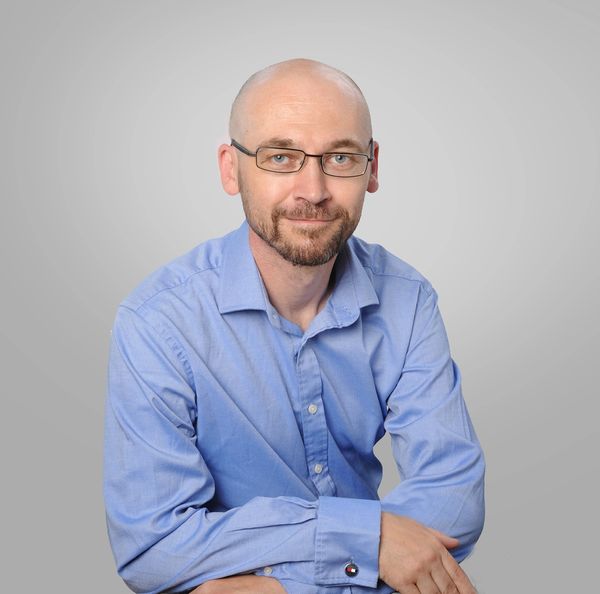
I speak about what is actually happening to security operations as AI moves into the SOC, which is usually more interesting and less tidy than the vendor version. Audiences get a position, the evidence behind it, and someone willing to disagree with them.
When each of them makes sense, and how to tell the two apart when the marketing describes them identically.
Why SIEM is breaking up into pipelines, and what that does to detection engineering.
How to structure a security organisation around agents instead of bolting them onto the org chart you already have.
What AI in the SOC can and cannot do yet, and why take-up stays far below what the marketing implies.
Where the costs actually come from, and which architectural choices change them.
Applying future studies methods to security planning, so a roadmap survives contact with the next three years.
Sessions written for your audience.
Forty-five to sixty minutes. A joint presentation with you or a partner, with shared promotion.
Half day or full day. An interactive small-group session on strategy or foresight, with materials and exercises.
Thirty to sixty minutes. A data-driven presentation tailored to your audience, with a custom talk, slide deck and Q&A.
Sixty to ninety minutes. A closed session for leadership, investors or policymakers, with a custom deck and live Q&A.
Joining a session someone else is running.
Forty-five to sixty minutes. Participation as an expert panellist in a vendor or media webinar.
Thirty to forty-five minutes. A recorded interview or roundtable on cybersecurity, AI or security operations.
Tell me the format you have in mind. If it is close to one of the above, I will quote against that.
Fees are in US dollars and exclude travel and accommodation for in-person engagements.
Webinar with Augusto Barros for Prophet Security, cutting through the hype around AI in security operations.
Whitepaper with Daylight Security on when to use AI SOC tooling, an AI-enabled MDR, or both.
Research with Dropzone AI on how AI analysts make SOCless operations workable for real enterprises.
Market report with Auguria on where security telemetry costs actually come from.
Research on continuous threat exposure management and how European organisations are adopting it.
Research on the gap between what AI SOC vendors promise and what practitioners actually report.
Oliver Rochford is a cybersecurity technologist and former Gartner research director covering SIEM, SOAR and XDR. He has held roles at Qualys, Verizon, HP, Tenable and Securonix, advises AI security operations startups, and publishes independent research on the AI-augmented SOC through Cyber Futurists.
Oliver Rochford is a cybersecurity technologist, researcher and former Gartner research director, where he covered security information and event management, security orchestration, and extended detection and response, and authored Magic Quadrant research. Over twenty-two years he has held roles at Qualys, Verizon, HP, Tenable and Securonix, and he advises a number of AI security operations and cybersecurity companies. He is a co-author on several editions of Hacking for Dummies and has written for SecurityWeek, CSO Online and Dark Reading. Media, academic researchers and think tanks including the OECD regularly interview and cite him. Through Cyber Futurists he publishes independent research on how artificial intelligence is reshaping the security operating model, and advises vendors on strategy, positioning and go-to-market.
Credit me as Oliver Rochford, Founder and Lead Analyst, Cyber Futurists. The headshot on this page is the approved one. Ask if you need it at print resolution or need a different crop.
Please reach us at oliver.rochford@cyberfuturists.com if you cannot find an answer to your question.
Yes, for in-person engagements. Travel and accommodation are billed separately at cost. I am based in the UK, so European events are straightforward and anything further needs more notice.
Four weeks is comfortable for a keynote or a workshop, since both are written for the specific audience. Panels and podcasts need considerably less.
Yes, and you are welcome to distribute the recording. Tell me in advance if you intend to gate it, since that changes how I write the closing.
I will read whatever context you send and tailor the argument to your audience. I will not present your positioning as my conclusion. If the two happen to agree, that is a good sign, and if they do not, it is better to find out before the event than during it.
Occasionally, for non-profits, academic events and conferences that do not pay any speaker. Ask.
Tell me the date, the audience and the format, and I will tell you within a day whether it works. If you are still shaping the agenda, a short call is easier than email.